
WordBubbles
Apprope ABWord
4.418.63K Reviews
- Version
- 2.3.7
- Installs
- 1.00M
- Age Rating
- Everyone
Screenshots
Our Review of WordBubbles
 Analysis by Appyee
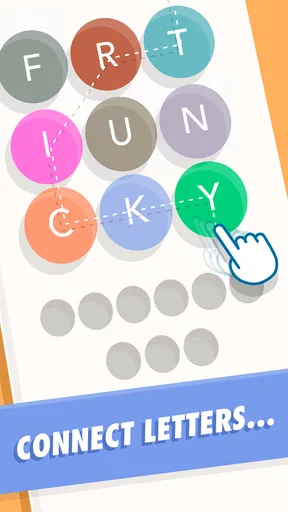
I installed WordBubbles expecting a quick word puzzle and found a game that is easiest to appreciate in short, quiet sessions. It takes the familiar pleasure of spotting words and gives it a light puzzle structure, so I could start playing without learning a complicated ruleset. That immediate accessibility is the main reason it works well during a commute, while waiting for an appointment, or when I want something calmer than a fast action game.
What matters more, though, is whether that first-week appeal survives. Many word games feel satisfying for a few evenings and then become background noise. My experience with this one is more balanced: it has enough convenience and mental exercise to remain useful, but its long-term value depends heavily on whether you enjoy repeating a focused word-search routine. It is free to start, rated for Everyone, and made by Apprope AB, which makes it an easy recommendation for casual puzzle players, but not an automatic fit for people looking for deep strategy or constant novelty.
Why the opening sessions work so well
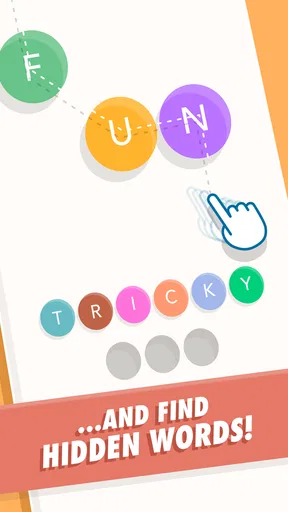
The first thing I liked was how little friction there is between opening the game and making progress. The word-game format is immediately recognizable, yet it does not feel exactly like simply solving a daily vocabulary challenge. I could scan the available letters, test possible combinations, and make decisions at my own pace. That gives each short session a pleasant rhythm: observe, try a word, adjust, and keep looking.
This makes the game particularly approachable for players who enjoy puzzles but do not want a heavy tutorial. I would happily hand it to someone who likes crosswords, anagrams, or casual brain-training games but dislikes timers and complicated menus. The Everyone age rating also reflects its broad accessibility. It is suitable as a family-friendly word activity, although younger players may still need help with unfamiliar vocabulary rather than with the controls.
The free entry point is important here. I could try the central experience without first deciding whether a subscription or a large purchase was worthwhile. That is exactly how a casual word game should earn attention: let the basic loop prove itself before asking for commitment. Optional in-app purchases range from $0.99 to $49.99 per item, so I would advise checking the purchase flow carefully if children use the device or if you prefer a completely controlled spending environment.
In the first week, I found the best use was not an extended sitting. A few rounds between other tasks felt more rewarding than trying to force a long marathon. The game suits the mental reset that comes from concentrating on letters for several minutes. It is also a good alternative to opening a social feed automatically, because it gives my attention a small, defined job instead of encouraging endless passive scrolling.
The kind of player who gets the most from it
I think the strongest audience is someone who wants a low-pressure vocabulary puzzle with a clear sense of immediate progress. If you enjoy spotting patterns, trying several possible words, and learning to look at a letter group from different angles, the format has a natural pull. It is also a reasonable choice for people who want a game that can be paused mentally and physically without losing the appeal of the next short session.
It is less convincing for players who need a strong narrative, competitive multiplayer, or a constantly changing set of mechanics. The store summary presents it as a new kind of word game for puzzle lovers, but I would not interpret that as a promise of a large adventure or a complex strategic system. Its pleasure comes from the word-solving activity itself. If that core activity does not appeal to you, a different genre will probably provide more lasting variety.
One practical tip helped me avoid early frustration: I stopped treating every visible possibility as an answer I had to find immediately. Instead, I scanned for familiar word shapes first, then returned to the awkward letters. That small change made the boards feel less like a test of instant vocabulary and more like a process of narrowing options. It is a useful approach for anyone who knows many words but sometimes gets stuck when the letters are presented in an unfamiliar arrangement.
What changes after the novelty wears off
After the first enthusiastic sessions, the important question becomes whether the game fits a repeatable habit. In my case, it worked best as a small daily or occasional ritual rather than as my main game. I could return when I wanted a quiet challenge, but I did not feel a strong need to spend a long evening inside it. That is not necessarily a weakness; for a word puzzle, a compact role can be more sustainable than demanding constant attention.
The game has accumulated a sizable audience, with more than one million installs, a 4.4 average from roughly sixty-four thousand ratings, and about nineteen thousand written reviews. Those figures suggest that its simple format has reached well beyond a tiny niche. They do not guarantee that every player will enjoy the same rhythm, but they do make the game feel like an established casual option rather than an experiment that might disappear after a few sessions.
For month-to-month value, I would judge it by how often you naturally want this particular kind of concentration. If you already solve word puzzles several times a week, it can become a dependable addition to that routine. If you only enjoy word games when there is a new theme, a social challenge, or a large progression system, the repeat value may feel thinner. The game is strongest when you value the act of solving, not just the reward for finishing.
A realistic everyday scenario is a short break during a workday. I might open it while waiting for a meeting to begin, solve a few puzzles, and close it before the break becomes a distraction. Because the basic activity is self-contained, it fits that situation better than a game that requires a long uninterrupted run. On a weekend, I could also use it as a gentle warm-up before tackling a crossword or another more demanding puzzle.
Another useful routine is to play when your attention is scattered but you still want to do something active. I found that looking for words creates a narrow focus without the pressure of a countdown. That can make the game feel more restorative than a competitive alternative. The trade-off is that the calm pace may seem too passive if you are playing specifically for excitement.
How I would manage spending and screen time
Because the game is free, I would begin with a simple rule: play the unpaid experience long enough to decide whether the core loop is genuinely enjoyable. Do not buy anything merely to solve the discomfort of being stuck. A word puzzle is most satisfying when the solution comes from reconsidering the board, and spending can weaken that sense of discovery if it becomes the first response to difficulty.
The broad purchase range also means different households should approach it differently. An adult who understands the optional purchases can make an informed choice, while a shared family tablet deserves purchase controls and a conversation about what is allowed. I would not describe the presence of purchases as a reason to avoid the game, but I would treat them as part of the maintenance routine: review the device settings once, then keep the game in its intended casual role.
For screen-time control, I found that stopping after a natural puzzle boundary worked better than setting an arbitrary promise to play “only briefly.” Word games can create a quiet form of repetition where one more attempt feels harmless. If you are prone to that pattern, decide before opening the app whether you are playing one round, taking a five-minute break, or using it until a specific task begins. The game itself is not demanding, but that is precisely why it can quietly extend a break.
Where the long-term friction appears
The main source of fatigue is repetition. The central word-solving behavior is the reason to install the game, but it is also the limit on its lifespan. Once I understood the visual rhythm and my preferred solving method, the experience became more predictable. That predictability is comforting for casual play, yet it can reduce the sense of discovery for someone who wants every return to feel substantially different.
Vocabulary can create a second kind of friction. A puzzle may be logically approachable while still feeling unfair if it depends on a word I do not use often. When that happened, I had to decide whether I was learning something new or simply guessing at the game’s expected vocabulary. Players with different backgrounds will naturally have different reactions here. Someone who enjoys expanding their word knowledge may welcome the challenge; someone seeking only familiar everyday language may lose patience.
There is also a difference between difficulty and depth. A harder word does not automatically create a deeper puzzle. If you are looking for layered planning, resource management, or a meaningful strategic choice beyond finding the right words, this is probably not the right destination. I would choose a more elaborate crossword, a competitive word battle, or a strategy puzzle for that kind of engagement. WordBubbles is better understood as a focused vocabulary exercise than as a broad puzzle system.
The release date, October 29, 2014, also puts the game in a mature part of its life. I see that as both reassuring and limiting. A long-running title can feel familiar and dependable, but it may not deliver the same sense of fresh design found in newer word games. The current version is 2.3.7, and it requires Android 7.0 or later, so users with older devices should check compatibility before planning around it.
One of my more useful habits was to separate “I cannot see the answer yet” from “the puzzle is too difficult.” I would first rearrange my attention: look at shorter possibilities, check common endings, and then revisit the remaining letters. If nothing clicked, I would leave the game and return later instead of turning the session into a guessing contest. That approach protects the game’s relaxing quality and makes it easier to keep it as a recurring habit rather than abandoning it after one irritating board.
Who should choose something else
I would skip this game if your main goal is a rich social experience. It is not the choice I would make for direct competition with friends, conversation-driven play, or a shared campaign. I would also look elsewhere if you want a game that rewards long planning sessions, offers a strong story, or changes its rules frequently enough to keep experienced players constantly surprised.
Players who dislike vocabulary ambiguity may also prefer a more formal crossword or a game with clearer definitions. In a traditional crossword, clues explain what kind of answer is expected. Here, the satisfaction comes more from recognizing possible words within the puzzle structure. That can feel quicker and more intuitive, but it may provide less guidance when your vocabulary and the intended answer do not line up.
On the other hand, someone who finds conventional crosswords intimidating may prefer this format because it lowers the entry barrier. I did not need to understand a clue style or commit to a long grid. The game gave me a direct way to interact with letters, which made it easier to play casually and stop without feeling that I had abandoned an unfinished newspaper puzzle.
Does it earn permanent space?
My long-term verdict is cautiously positive. I would keep WordBubbles installed if I wanted a small, reliable word puzzle for spare moments. Its free starting point, broad age rating, approachable play, and established audience make it easy to recommend to casual players. The developer, Apprope AB, has built something that does not need a large explanation to become useful.
That recommendation comes with a clear condition: keep your expectations focused. This is not the game I would choose for a dramatic progression system or endless mechanical variety. Its lasting value comes from being available when I want a compact vocabulary challenge, not from continually reinventing itself. For me, that is enough to justify space on a phone used for short breaks, especially when I want an activity that feels more engaged than scrolling and less demanding than a full puzzle session.
The game’s age, current version, and optional purchase structure are worth considering alongside that verdict. A player on a compatible Android device can try it without an upfront price, while anyone sensitive to in-app spending should set boundaries before handing over the phone. Those are manageable considerations, but they matter because the game’s appeal is quiet and repeatable; a small amount of friction in access, spending, or expectations can determine whether it becomes a habit or gets forgotten.
In the end, I would recommend it to a friend who says, “I want something word-based that I can play for a few minutes without pressure.” I would not recommend it to someone asking for a deep, constantly evolving puzzle adventure. Its best quality is its dependable simplicity, and its biggest weakness is that the same simplicity can eventually feel familiar. If that trade-off suits the way you play, it can remain useful long after the first-week novelty has faded.
Verdict
Strengths of WordBubbles
- Relaxing gameplay suitable for short or extended sessions.
- Large word variety keeps puzzles from feeling repetitive.
- Simple controls make it accessible for most players.
- Helpful hints can get you unstuck without ending a level.
- Works well as a casual game for improving vocabulary.
Limitations of WordBubbles
- Some later puzzles may feel overly dependent on trial and error.
- Hint availability can become limited unless you watch ads.
- Repeated level patterns may reduce the challenge over time.
- The game may feel slow for players seeking fast-paced action.
- Progress could be frustrating when a single missed word blocks completion.
Other Releases by Apprope AB
View All
WordWhizzle Connect
Word4.6

WordWhizzle Pop
Word4.6
Similar Picks in This Category
View All
Word Search - Word Puzzle Game
Bluetile4.8

Word Search Quest - Puzzles
Blackout Lab4.8

CodyCross: Crossword Puzzles
Fanatee, Inc.4.7

Words of Wonders: Crossword
Fugo Games4.9

Wordscapes: Word puzzle game
PeopleFun4.7

Word Search Explorer
PlaySimple Games4.9
Frequently Asked Questions
What is WordBubbles and how does the game work?
WordBubbles is a casual word puzzle game in which you connect or arrange letter bubbles to form the correct words. Each level presents a different challenge, usually requiring you to discover words from a limited set of letters. The difficulty gradually increases, making it suitable for short relaxing sessions as well as longer play. Its simple controls make it accessible for most ages.
Is WordBubbles free to download and play?
WordBubbles can generally be downloaded and played for free, although the experience may include advertisements, optional in-app purchases, or both, depending on the platform and version available in your region. Some purchases may provide hints, remove ads, or unlock additional content. Before downloading, it is worth checking the store listing for current pricing, subscription details, and any purchase requirements.
Does WordBubbles require an internet connection?
WordBubbles is primarily designed as a mobile puzzle game and many of its basic levels can typically be played without a constant internet connection. However, an online connection may be needed for advertisements, purchases, updates, cloud features, or special events. Availability can vary between Android and iOS versions, so players who want to play offline should test the game after installation.
Is WordBubbles suitable for children and beginners?
WordBubbles is generally easy for beginners to understand because its gameplay focuses on forming words with straightforward touch controls. It may also be appropriate for children who can read and spell, although parents should review the game’s advertising, privacy settings, and optional purchases before allowing independent play. Later levels can become challenging, so younger players may occasionally need help.
What are the main advantages and disadvantages of WordBubbles?
The main advantages of WordBubbles are its simple controls, quick levels, relaxing gameplay, and ability to provide vocabulary practice without requiring complicated instructions. It can be a convenient choice for commuting or short breaks. Potential disadvantages include repetitive gameplay for some players, increasing difficulty, advertisements, and possible reliance on hints or purchases when a puzzle becomes difficult.
Play our best games!


